
What to Check Before Buying a Condo in Mexico
A condo can be the easiest way to own in Mexico, but only when the property, building, rules and location match the way you actually plan to use it. Before you fall for the view, the rooftop or the price, slow down and check the pieces that protect the purchase.
Start with the use case, not the search filter
The first mistake many buyers make is opening a listing page and sorting by price before defining the job the condo has to do. A condo for full-time living is not the same product as a lock-and-leave vacation home, and neither one is exactly the same as a property meant to generate rental income. The building can look beautiful in all three scenarios, but the questions behind the purchase change completely. A full-time buyer should care about daily noise, parking, storage, groceries, medical access and the quality of the residents around them. A seasonal buyer should care about access, security, maintenance while away and whether the home feels easy to return to after several months.
Investors need to be even more precise. They should ask whether the property is legally allowed to operate the way they imagine, whether management is realistic, what the owner association permits and how the destination behaves outside peak travel dates. A downtown option like a Playa del Carmen condo with infinity pool and ocean view may fit a buyer who wants walkability and short stays, while a quieter residence near a marina or golf setting may work better for someone who wants control, order and less daily movement. The same word, “condo,” can hide very different ownership experiences.
Read the location at three speeds
A strong condo location should make sense at three speeds: walking, driving and living. Walking speed tells you what happens immediately outside the building. Can you reach a café, beach access, restaurant, pharmacy or convenience store without turning every errand into a production? Driving speed tells you how the property connects to airports, hospitals, schools, marinas, golf, business districts or other neighborhoods. Living speed is slower and more honest. It asks how the area feels on a normal weekday morning, during a rainy evening, on a holiday weekend and when you are not in tourist mode.
This is where buyers should compare destinations without forcing them into the same box. A studio near the beach in Playa del Carmen may serve a buyer who values movement and easy access to town. A luxury ocean view condo in Puerto Cancún speaks to another buyer who wants waterfront lifestyle with urban services nearby. A condo with golf course views in Tulum Country Club creates a different rhythm, more resort-oriented and planned. None is universally “better.” The better option is the one whose surroundings still make sense after the first exciting tour is over.

Understand the condo regime before you admire the amenities
In Mexico, the condo regime is not a technical footnote. It is the framework that explains how the property operates, what belongs to each private owner, what belongs to the common area and how shared responsibilities are paid. Buyers should ask for the rules, bylaws, fee structure, maintenance history, voting process and any restrictions that affect rentals, pets, remodeling or exterior changes. This is not glamorous reading, but it is often where the real purchase decision becomes clear. The pool may photograph beautifully; the documents tell you whether the building is managed with discipline.
A well-run building usually has transparent fees, predictable maintenance, clear communication and reserves or procedures for future repairs. A weak one may depend on emergency payments, informal decisions or vague promises. That does not always mean a buyer should walk away, but it changes the risk profile. Before buying, ask what the monthly fees include, how often they increase, whether there are unpaid dues, whether major repairs are planned and who manages day-to-day operations. A condo is not only a private unit; it is a small shared ecosystem. Ignore that, and the building eventually sends you the invoice with interest.
Treat amenities as operating costs, not decoration
Rooftops, gyms, pools, beach clubs, elevators, concierge desks and wellness areas are attractive because they make the property feel complete. They also require staffing, cleaning, equipment, insurance, utilities and maintenance. Buyers should not only ask what amenities exist; they should ask how they are paid for, how often they are used and whether they match the building’s size. A small building with oversized amenities can be charming, but the math may be heavier per owner. A large building with disciplined management can sometimes operate a broad amenity package more efficiently.
This matters across markets. A resort-style condo in Cancún, a beachfront residence in Tulum and a marina-focused home in Puerto Aventuras all create different maintenance realities. For example, a luxury oceanfront condo in Cancún’s Hotel Zone may depend on a higher-service environment, while a condo with ocean view in Puerto Aventuras Marina may place more emphasis on access, security and waterfront upkeep. The amenity list should not be read like a hotel brochure. Read it like a budget.
Ask how rentals are handled, even if you do not plan to rent immediately
A buyer may say, “I do not want to rent it,” and that may be true today. Life changes. Travel schedules change. Families use the property less than expected. A future sale may depend on whether the next buyer can legally and practically rent the unit. That is why rental rules matter even for lifestyle buyers. Ask whether short-term rentals are allowed, whether there are minimum stay rules, whether the building requires an approved manager, whether platforms are restricted and whether owners have to register guests in a specific way.
It is also smart to separate rental potential from rental fantasy. A unit can be rentable without being a guaranteed income machine. Seasonality, furnishing quality, photography, reviews, operating costs, taxes, management fees and competition all affect performance. In destinations such as Cozumel or Huatulco, the rental story can be more specialized, tied to divers, winter travelers, retirees or longer stays. A furnished apartment with rooftop pool in Cozumel may have a different audience than a high-traffic urban condo. The question is not only “Can it rent?” It is “Who rents this, why, and how often?”
Check the unit like you plan to live there on an ordinary Tuesday
Beautiful staging can hide weak daily function. Before buying, stand in the kitchen and imagine actual cooking, not just coffee in the listing photos. Open closets. Look for pantry space, laundry space, air-conditioning placement, cross ventilation, water pressure, natural light and noise transfer between rooms. If the condo is furnished, ask what is included and what is decorative. If it is pre-construction, study the measurements carefully because renderings are professional optimism wearing designer shoes.
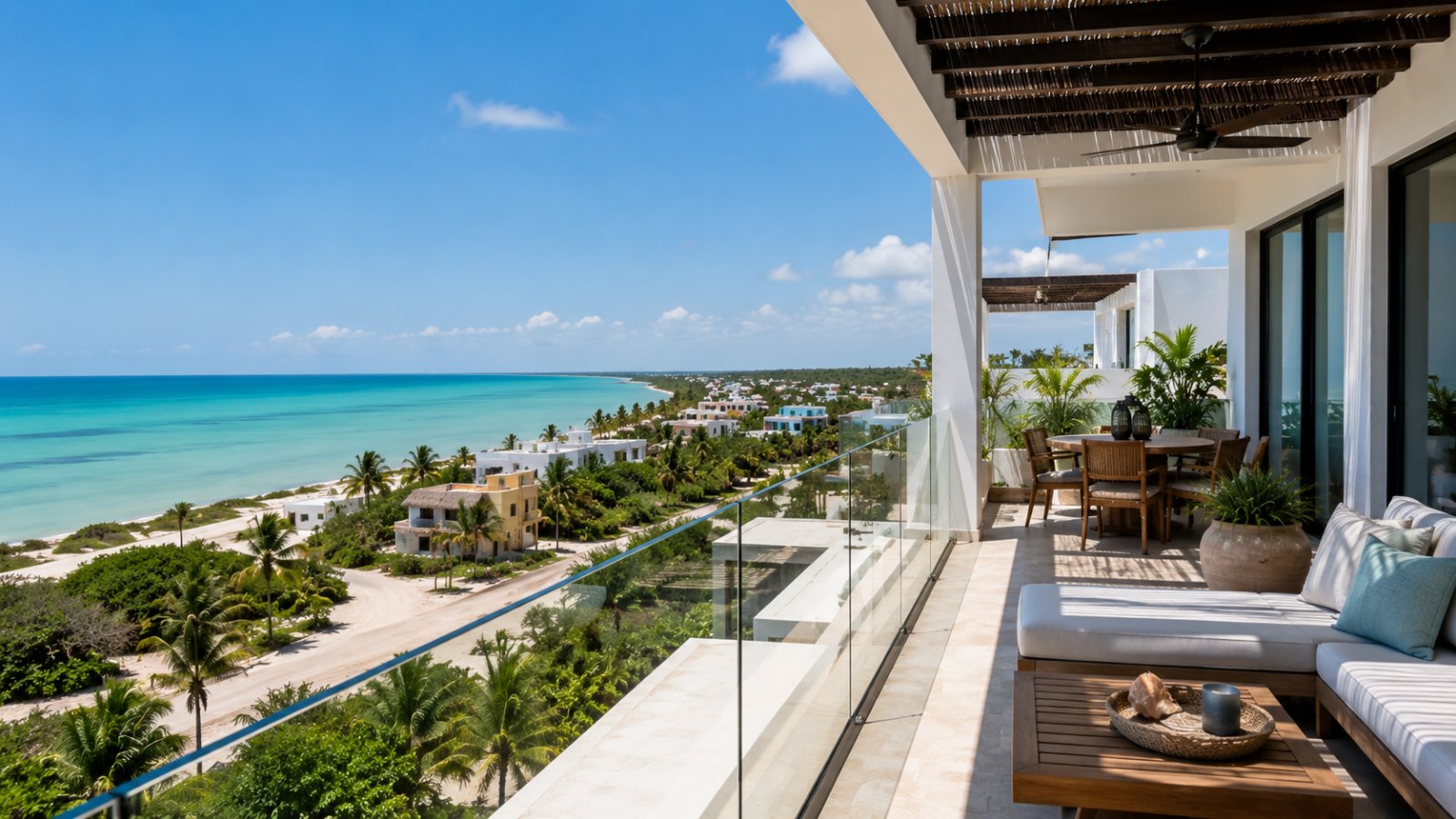
Outdoor areas deserve the same scrutiny. Terraces, balconies and rooftops can add major value, but only if they are comfortable at the times you will use them. A terrace facing strong afternoon sun may look spectacular in photos and feel impossible at 3 p.m. A rooftop may be beautiful but exposed to wind, stairs or maintenance. In beach and coastal markets, buyers should ask about materials, humidity, corrosion and drainage. The view is important. The question is whether the property will still feel smart when the view is not doing all the selling.
Look at building age, delivery status and documents
Completed condos, newly delivered condos and pre-construction condos require different checks. In a completed building, review maintenance history, occupancy, current rules and how the association actually behaves. In a newly delivered building, ask what has been handed over, what warranties exist and whether common areas are fully finished. In pre-construction, look closely at developer reputation, payment schedule, delivery clauses, permits, escrow structure if applicable and what happens if timelines move.
Pre-construction is not automatically bad; many buyers choose it because they want pricing, new design or flexible payments. But it requires patience and document review. Completed property is not automatically safer either if the building has poor management or hidden maintenance issues. The point is to understand what type of risk you are accepting. A buyer comparing a beach club condo in Tankah, Tulum with an established unit elsewhere is not choosing only between views. They are comparing legal timing, operating history and the path from offer to possession.
Compare markets by ownership behavior, not only by postcard appeal
Mexico’s condo markets are not interchangeable. Playa del Carmen often attracts buyers who want walkability and a practical base. Cancún can work for buyers who want services, airport access and a more urban Caribbean structure. Tulum may appeal to people seeking design, wellness, nature and boutique resort energy. Cozumel has a more island-focused buyer. Puerto Aventuras is attractive for people who want a private community feel. Huatulco speaks to buyers who value calm, topography and ocean views without the same density.
Urban markets bring another lens. A San Pedro apartment in Monterrey with family amenities is not competing directly with a beach condo; it is solving a different lifestyle problem around business, schools, privacy and long-term urban value. A Chelem condo with ocean view and rooftop pool in Yucatán may appeal to buyers thinking about slower coastal living near Mérida. The smart buyer does not ask which market is best. The smart buyer asks which market rewards their actual plan.
Bring the financial picture into the conversation early
The purchase price is only the beginning. Buyers should budget for closing costs, notary expenses, possible bank trust structure near restricted zones, furniture, appliance upgrades, insurance, HOA fees, utilities, property management, repairs and taxes. None of this needs to be scary, but it should be visible before making an offer. A clean budget helps buyers avoid the classic trap of buying the maximum unit and then being surprised by the real ownership cost.
It is also wise to define how flexible you are. If the goal is lifestyle, perhaps the right condo is not the cheapest one but the one you will actually use. If the goal is rental income, the emotional favorite may not be the strongest performer. If the goal is long-term value, the best fit may be in a stable building with disciplined management rather than the flashiest new tower. Real estate rewards clarity more than impulse.
Use a real estate agency as a filter, not just a door opener
A strong agency does more than unlock properties. It helps translate the market. It can point out when a listing is attractive but not aligned with the buyer’s plan, when a building deserves more document review, when a location works better for vacation than full-time living or when a property type may bring more maintenance than expected. The value is not pressure. The value is perspective.
For international buyers especially, having guidance matters because the process includes unfamiliar steps, different timelines and local norms. The right advisor helps organize options, coordinate questions, introduce the right professional support and keep the buyer focused. A condo purchase should feel exciting, but it should not feel blind. The more you know before the offer, the less drama you inherit after closing.
A practical final checklist
Before moving forward, confirm the use case, the location logic, the building rules, the monthly fees, the rental policy, the management structure, the delivery status, the maintenance expectations and the total budget. Then ask one last question: would this condo still make sense if the photography disappeared? If the answer is yes, you are probably looking at a property with substance, not just presentation.
That is the point of the process. Buying a condo in Mexico can be simple, enjoyable and strategically smart when the decision is grounded. The goal is not to remove emotion; the best purchases usually have plenty of it. The goal is to support that emotion with enough structure that you can enjoy the property without constantly wondering what you missed.
Selva & Co Realty
Get clear guidance before you choose a property
Our team can help you compare locations, property types and purchase scenarios with a realistic view of the Mexican real estate market.
The images shown may not be real and are for reference purposes only.