

Buying Real Estate in Mexico City: A Guide for Luxury Buyers
Mexico City is not a market to approach with a single checklist. A luxury buyer may be comparing a garden residence in Bosques de las Lomas, a polished penthouse in Condesa, a lock-and-leave apartment near the historic core or a family-scale home in the west of the city. The right purchase begins by understanding how the capital actually works: movement, privacy, building quality, neighborhood identity and the rhythm of daily life.
The first decision is not the property; it is the city routine
In a beach market, the first question is often distance to the water. In Mexico City, the first question is movement. Where do you want breakfast, school runs, meetings, dinners, airport access and weekend plans to happen? A buyer looking at Mexico City real estate should begin with a realistic week, not only with photos of interiors. The wrong area can make a beautiful residence feel heavy; the right area can make a smaller home feel effortless.
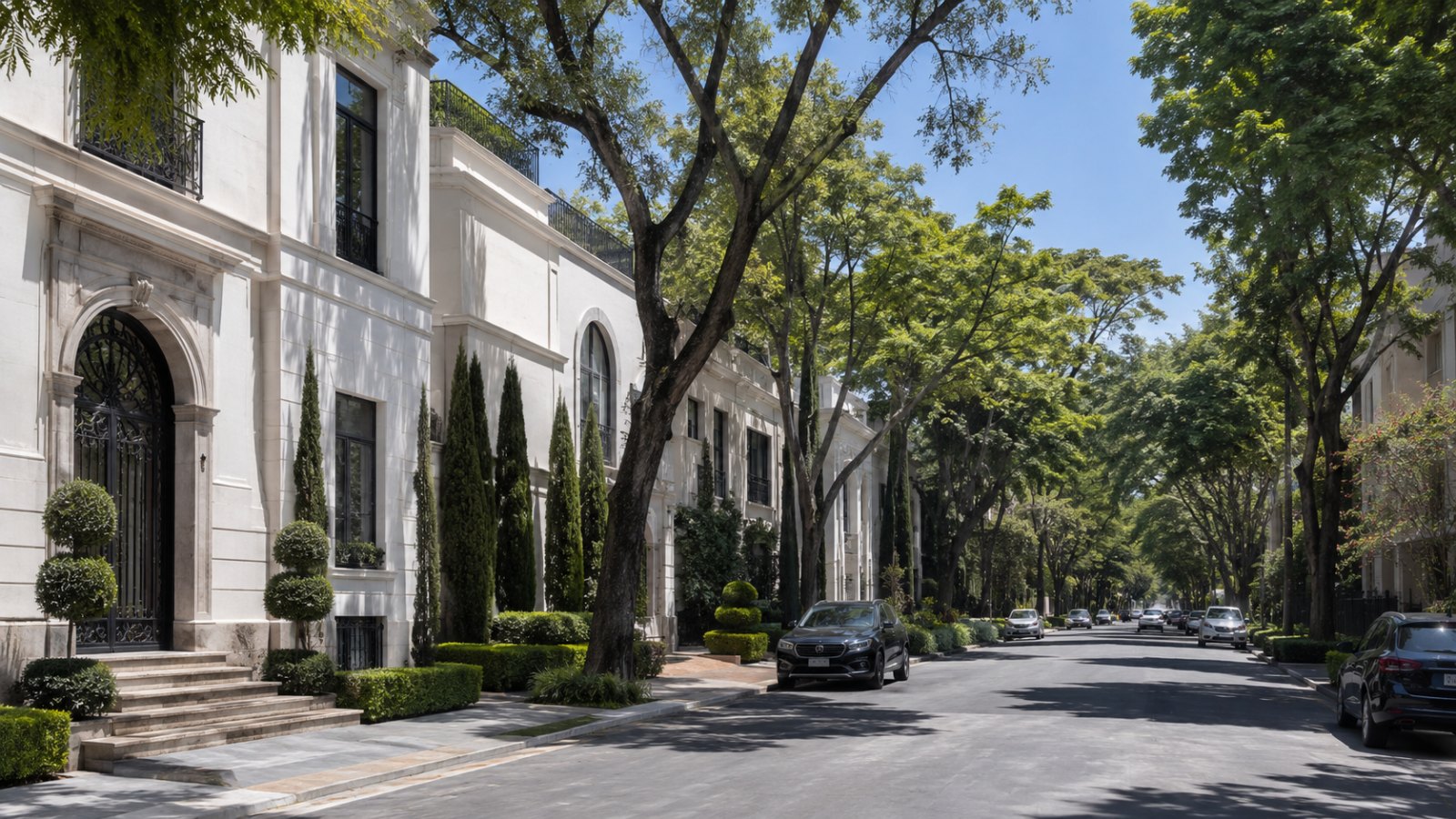
For luxury buyers, this is especially important because premium value is not limited to finishes. Time, privacy, security, natural light, parking, staff access, building administration and the ability to receive guests all matter. A showing should answer how the property behaves at 8:00 a.m., 6:00 p.m. and on a rainy Friday night, not just how it photographs on a clear afternoon.
A family considering a western residence may compare options such as a gated-street home in Lomas de Vista Hermosa with larger residences in Bosques or Lomas Altas. A buyer who wants cultural access may prefer a vertical property closer to Cuauhtémoc, Roma, Condesa or Polanco. Neither path is automatically better. The question is whether the address supports the life you are trying to build.
How a serious buying process should be organized
A stronger process separates exploration from selection. During exploration, the buyer should see different neighborhoods, property formats and levels of maintenance. During selection, the shortlist should become tighter: two or three areas, one or two property types and a clearer budget range. Many buyers lose time because they keep comparing every beautiful listing against every other beautiful listing, even when the daily use case is completely different.
This is where an advisor can help translate interest into structure. A buyer might like the privacy of Bosques de las Lomas homes and the convenience of central apartments at the same time, but those are different ownership experiences. One may offer garden scale and privacy; the other may offer walkability, concierge support and easier part-time use.
Instead of asking “Which property is best?”, the better question is “Which property creates the fewest compromises for the way I will actually use it?” That question immediately filters noise. It also prevents a buyer from overpaying emotionally for a feature that looks impressive but does not improve the lived experience.
Neighborhood identity changes the meaning of luxury
In Mexico City, luxury is expressed differently by zone. Polanco may feel international, polished and walkable. Lomas and Bosques often speak to privacy, family space and larger residences. Condesa and Roma lean into culture, restaurants and urban rhythm. Santa Fe and the western corridor bring corporate access, newer buildings and car-oriented convenience. Cuauhtémoc can appeal to buyers who want central energy with practical vertical living.
A high-rise buyer might review a high-floor condo with amenities differently from a house buyer reviewing gardens, service areas and street access. The same budget can produce very different lifestyles. That is why neighborhood identity should be evaluated together with the property type, not after it.
The best neighborhoods are not universal; they are contextual. A buyer relocating with children, pets and household staff may have different priorities than a couple who wants restaurants, art galleries and low-maintenance ownership. A luxury purchase works best when the neighborhood, building and property type all tell the same story.
What to verify before falling in love with the interiors
Beautiful interiors can distract from practical risk. Buyers should review title status, permitted use, building rules, homeowners association documentation where applicable, maintenance obligations, parking assignment, water systems, renovation history and any limitations that may affect future resale. This is not about fear. It is about making a premium decision with full visibility.
For vertical properties, administration matters. A central loft with rooftop lounge may appeal because it simplifies arrivals and urban access, but the building’s rules, fees, reserves, rental policies and maintenance culture still matter. For houses, review is different: structure, gardens, service systems, access, security, neighboring conditions and any remodeling work become more important.
Foreign buyers should also receive qualified guidance on the ownership structure that applies to their situation. The goal of the blog is not to replace legal advice. The goal is to remind serious buyers that a luxury purchase deserves a professional team: real estate guidance, notary review, tax advice and legal support when needed.
The best showing day is designed, not improvised
A productive showing day should not jump randomly from one pretty property to another. It should be built as a route. Start with the area that best matches the buyer’s primary lifestyle, then compare one contrasting area so the trade-offs become visible. See one house, one apartment and one penthouse only if the buyer is genuinely open to each property type. Otherwise, the tour becomes entertainment rather than decision-making.
A buyer comparing city living may see a loft near the Monument to the Revolution and then a penthouse option with terraces. A family buyer may instead focus on houses in Bosques, Lomas Altas or similar western addresses. The route should answer practical questions: commute, parking, noise, light, privacy, service access and how the property feels after the first impression wears off.
The strongest buyers take notes after each visit. What did the property solve? What did it complicate? What would need to be verified? What felt exciting but perhaps unnecessary? These questions keep emotion in the room without letting it drive the entire purchase.
When a luxury buyer should slow down
Slowing down is useful when the buyer cannot clearly explain why one property is better than another. It is also useful when the appeal is almost entirely visual, when the building documentation is incomplete, when renovation quality is unclear or when the neighborhood does not fit the daily routine. In a market as layered as Mexico City, patience is not weakness. It is part of good acquisition strategy.
Another reason to slow down is a mismatch between ownership style and property type. A buyer who wants easy arrivals may not enjoy a demanding house, even if the home is beautiful. A buyer who values privacy may not enjoy the rules of a dense building, even if the amenities are polished. Reviewing Mexico City buyer guides can help frame those decisions before making an offer.
The right property should feel exciting and defensible. It should make sense emotionally, practically and financially. When those three pieces align, a Mexico City purchase can become more than an address; it can become a durable urban base in one of the most culturally rich real estate markets in the country.
The offer should match the property’s real strengths
A well-structured offer in Mexico City should be based on more than enthusiasm. The buyer should understand why the property deserves attention: scarcity of the location, quality of the building or house, condition of the interiors, clarity of documents, practical value of parking, outdoor space, privacy and the future buyer profile. When those strengths are clear, the negotiation becomes more grounded and less emotional.
Luxury buyers should also decide which items matter before the offer is written. Appliances, fixtures, furniture, art, maintenance repairs, move-in timing and document delivery can create confusion when they are discussed too late. A calm offer process lists the essentials early so the transaction does not get dragged into avoidable details after acceptance.
What international buyers should avoid assuming
International buyers sometimes assume the capital will behave like other global cities they know. That can lead to mistakes. Building rules, transaction steps, notary involvement, tax considerations, local negotiation customs and neighborhood-by-neighborhood differences may not match what the buyer expects from New York, Miami, Madrid or Los Angeles. The safer approach is to listen first and compare later.
They should also avoid assuming that “luxury” automatically means easy ownership. A beautiful house may need more staff and maintenance. A penthouse may need terrace review. A central loft may need stricter building-rule analysis. Mexico City rewards buyers who separate image from operation.
The strongest purchase feels calm after the tour
After a full day of showings, the right property usually remains clear for practical reasons, not only because of one dramatic feature. The buyer can explain how it will be used, why the location works, what the maintenance profile looks like and what must still be verified. That calm clarity is often a better signal than immediate excitement.
The purpose of luxury guidance is not to rush the buyer into a prestigious address. It is to help the buyer recognize when a property fits the real brief. In Mexico City, the best purchases respect the complexity of the capital and still feel personal, usable and defensible.
What should feel clear before you compare price
Before the buyer compares numbers, the property should pass a human test. Can the owner explain why this address makes life easier? Can the owner imagine using the home in a normal week, not only during a perfect visit? Can the owner identify what needs to be verified without feeling that the entire decision depends on hope?
This filter is simple, but it prevents many weak purchases. If the property cannot be explained clearly, the buyer probably needs more time or a better comparison. If the property can be explained in practical language, the financial review becomes more useful because it is attached to a real use case.
The best Mexico City decisions combine emotion with operational clarity. They allow the buyer to enjoy the city while knowing why the property was chosen, what it will require and how it may remain relevant over time.
Selva & Co Realty
Final buyer questions for the first offer
A final review should connect the property to the owner’s actual calendar. Think through arrivals from the airport, weekly errands, guest visits, parking, building access, maintenance coordination and the level of privacy expected. These everyday details rarely appear in a listing description, but they often determine whether ownership feels elegant or frustrating.
It is also useful to compare the property against one alternative you would genuinely buy. If the chosen home still makes sense after that comparison, the decision becomes stronger. If the alternative exposes weaknesses that were not obvious at first, the buyer has learned something valuable before committing.
Explore Mexico City Real Estate
Compare neighborhoods, property types and ownership details with local guidance before you choose your Mexico City base.
Explore Mexico City Real Estate →
The images shown are for reference purposes only and may not represent reality.