
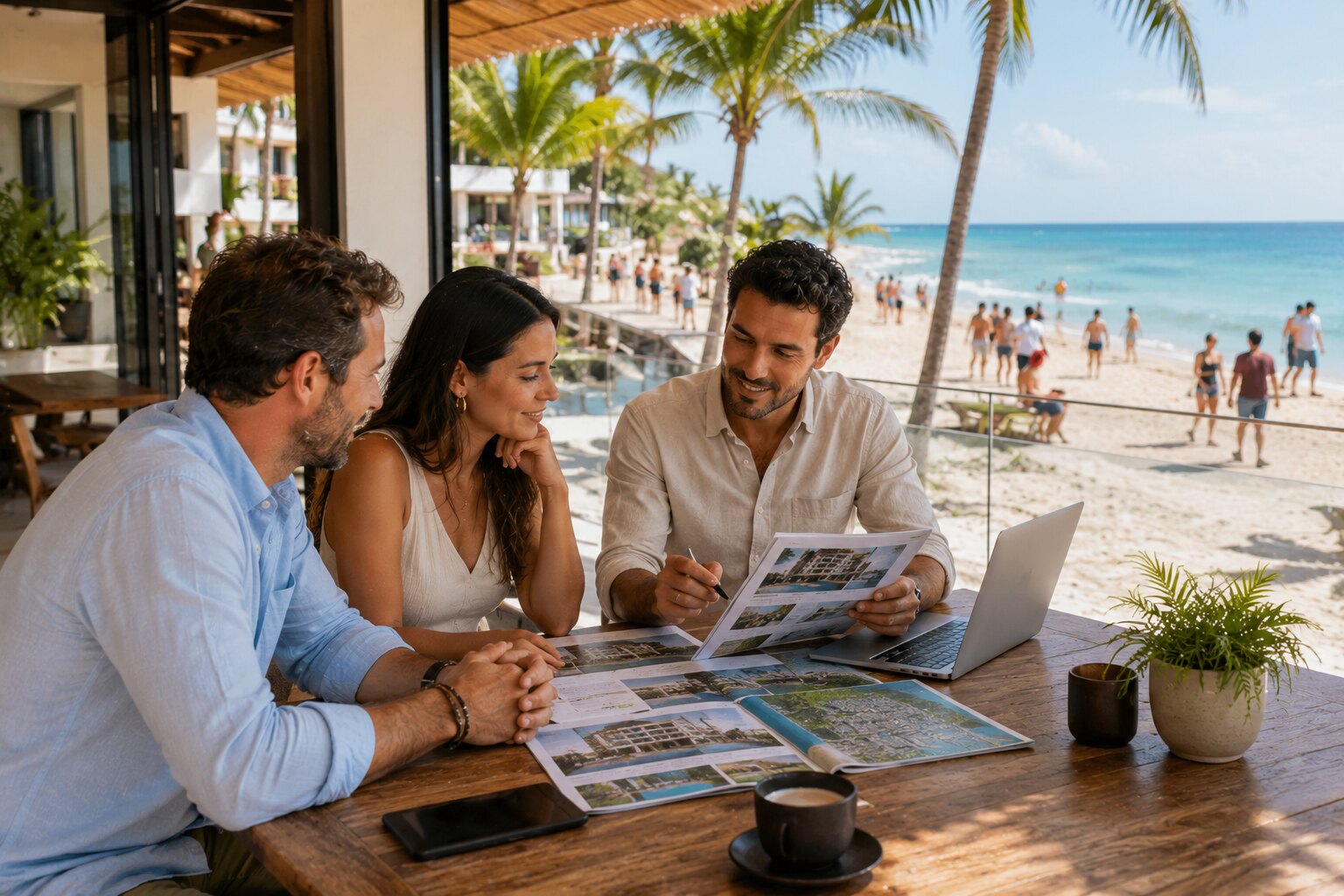
Why Playa del Carmen Remains One of Mexico’s Most Attractive Real Estate Markets
Playa del Carmen continues to attract real estate buyers because it combines lifestyle demand, practical services and varied property options. The smartest buyers evaluate that appeal with discipline, not hype.
Attraction without hype
Playa del Carmen remains attractive because it sits at the intersection of lifestyle, access and usable real estate. Buyers are drawn to the idea of a coastal city that feels international without losing its Mexican Caribbean identity. The appeal is not based on one single feature. It comes from the combination of beach proximity, walkability, residential options, restaurants, services and the ability to compare different lifestyles within the same market. That is why Playa del Carmen real estate continues to show up in conversations with second-home buyers, relocation clients and investors.
That does not mean every property is a smart purchase. A mature buyer should avoid shortcuts, exaggerated projections and one-size-fits-all claims. Market appeal creates opportunity, but the result still depends on the individual property, the building, the location, the legal review, the management plan and the buyer’s time horizon. Playa del Carmen can be compelling, but it should be evaluated with discipline rather than hype.
Why lifestyle demand matters
One reason Playa del Carmen continues to attract attention is that the lifestyle is easy to understand. A buyer can imagine using a downtown condo with ocean view for seasonal stays, remote work or a simple coastal base. The city offers restaurants, services, beach access and a social rhythm that many international buyers can adapt to quickly. That day-to-day usability is a form of durability: people are not just buying a view; they are buying a routine they can actually use.
Amenity-rich properties also support the lifestyle argument. A 5th Avenue penthouse with coworking space speaks to buyers who want buildings that include work, wellness and leisure features. These details can matter because the way people use second homes has changed. A property is no longer only a place to sleep between beach days. It may also be a workspace, a long-stay residence, a family base or a property that needs to remain comfortable during extended ownership.
The different investment profiles inside the market
Not all Playa del Carmen investment conversations are the same. A Playacar private residential option may attract a buyer focused on privacy and prestige. A Coco Beach penthouse with rooftop pool may appeal to someone looking for beach-zone lifestyle and lock-and-leave convenience. A Valenia residence with clubhouse may be stronger for a family-oriented owner who values residential comfort and amenities. Each profile has different risks, operating needs and long-term logic.
Buyers should evaluate whether the property depends mainly on personal enjoyment, future resale appeal, rental potential where allowed, or a blend of these goals. A property that works beautifully as a personal retreat may not be the easiest to rent. A highly rentable unit may not feel spacious enough for family life. The strongest decisions come when the buyer is honest about the primary purpose of the purchase.

What due diligence should include
In a market with strong demand, due diligence becomes even more important. Buyers should review title history, condominium regime documentation, homeowners association rules, delivery dates for new product, maintenance fees, rental policies, building reserves, developer track record and the practical condition of the property. A Puerto Aventuras marina properties, for example, should be considered not only for its amenities but also for how the community is administered and how ownership responsibilities are structured.
For foreign buyers, ownership structures and closing processes must be reviewed carefully with appropriate professionals. The coastal nature of the Riviera Maya means buyers should understand how restricted-zone rules may apply to residential acquisitions. This is not a reason to avoid the market; it is a reason to follow the process correctly. Smart buyers do not skip steps just because the balcony view is doing a full marketing presentation.
How Playa compares with nearby options
Playa del Carmen also remains attractive because it sits between other strong lifestyle markets. Buyers may compare it with Tulum real estate alternatives for a more marina-oriented or private-community environment, or with Tulum real estate alternatives as part of a broader Riviera Maya conversation. They may compare it with Tulum for design and wellness identity, or Cancún for larger-city convenience and airport access. Playa’s advantage is often balance: enough activity to feel practical, enough coastal character to feel special.
The market is strongest for buyers who know what they want and are willing to filter. The right property should hold up across lifestyle, location, management and legal review. When those pieces align, Playa del Carmen can be a serious long-term choice. When they do not, even a photogenic listing should be treated with caution.
A practical buyer checklist
A serious buyer should leave each property visit with clear notes. How does the building feel on arrival? Is the lobby maintained? Are common areas clean? Is the elevator reliable? Where is the parking? Does the unit receive enough natural light? Are there neighboring construction sites? How does the street feel at night? These questions are not glamorous, but they protect the buyer from making a decision based only on mood.
Buyers should also compare monthly carrying costs. Association fees, utilities, insurance, property management, maintenance reserves and occasional repairs can change the ownership experience. A property that looks affordable at purchase may feel less attractive if the operating structure is not aligned with the owner’s expectations. The goal is not to find a property with no costs; that property does not exist. The goal is to understand the costs before committing.
Finally, buyers should separate wants from non-negotiables. A rooftop pool may be a want. Proper documentation is non-negotiable. A pretty furniture package may be a want. A building that allows the intended use is non-negotiable. A few blocks closer to the beach may be a want. A location that feels safe and usable for the buyer’s routine is non-negotiable. That distinction keeps the search clear.
Ownership scenarios to compare
It also helps to compare three ownership scenarios before making a decision. In the first scenario, the property is mostly personal: the owner uses it with family and friends, values comfort over yield, and wants the home to feel familiar every time they return. In that case, layout, storage, privacy, parking, natural light and the emotional feel of the neighborhood may carry more weight than rental efficiency.
In the second scenario, the property is mixed-use: the owner wants to enjoy it, but also wants the option to generate income where building rules and local requirements allow it. This buyer has to think like both a resident and an operator. Furniture durability, access control, cleaning logistics, guest experience, building administration and management reliability become part of the evaluation. A good-looking unit with complicated rules may not serve this scenario well.
In the third scenario, the property is mainly strategic: the buyer is focused on long-term ownership, market positioning and future flexibility. This does not mean chasing guarantees. It means choosing a location and property format that remain understandable to future buyers. Simple layouts, strong administration, useful amenities, clear documentation and a neighborhood with lasting lifestyle appeal often matter more than trend-driven design details.
Questions to ask before making an offer
Before making an offer, buyers should ask what problem the property solves. Does it solve the need for beach access? Does it solve the need for family space? Does it solve the desire for a low-maintenance base in Mexico? Does it solve the need for a property that can be managed professionally when the owner is away? If the answer is vague, the buyer may be reacting to presentation rather than making a grounded decision.
They should also ask what could become inconvenient over time. A beautiful unit may have limited storage. A central location may bring noise. A private home may require more maintenance. A gated community may require more driving. None of these issues automatically disqualify a property, but they should be visible before the buyer commits. Every property has tradeoffs. The buyer’s job is to choose the tradeoffs they can live with.
This is where local guidance becomes valuable. An advisor who knows the area can help interpret the difference between a marketing feature and a daily-life advantage. The goal is not to make the search more complicated. The goal is to make the decision cleaner, so the buyer can move forward with confidence rather than crossed fingers.
How to move from interest to action
The best next step is not to see every listing in the market. The best next step is to create a short, organized buyer profile: preferred use, desired area, property type, budget range, tolerance for maintenance, rental expectations where applicable and timeline. Once that profile is clear, the search becomes more strategic and less exhausting.
Playa del Carmen offers enough variety to support many buyer profiles, but that variety can also create confusion. A focused advisor helps reduce noise. Instead of chasing every attractive photo, the buyer compares only the properties that match the plan. That is how a lifestyle dream becomes a responsible real estate process.
Final review before publication or purchase
The final review should bring the conversation back to fit. If the property is meant for personal use, the buyer should imagine ordinary days, not only vacation days. If it is meant for flexible ownership, the buyer should confirm whether the rules, layout and management plan support that flexibility. If it is meant as part of a long-term portfolio, the buyer should ask whether future buyers will understand the value as clearly as the current buyer does.
This review also keeps the search honest. Playa del Carmen has many visually appealing properties, and strong presentation can create urgency. A calm review slows the decision down just enough to protect it. The right property should still make sense after the buyer compares documents, area, management, costs, building rules and the way the home will actually be used.
When those pieces align, the decision becomes easier. The buyer is no longer choosing from every attractive listing in Playa del Carmen. They are choosing from a short list of properties that match lifestyle, operations and long-term logic. That is the difference between browsing real estate and buying well.
Selva & Co Realty
Final perspective before choosing
A strong Playa del Carmen purchase should still feel logical after the excitement of the first visit. Buyers should compare the property against their real use pattern, not only against other listings. They should ask how the home will feel during ordinary mornings, how easy it will be to maintain, who will handle details when they are away and whether the location supports the life they actually want. That final layer of honesty is often what turns a good-looking option into the right property.
Evaluate Playa del Carmen with a clear investment lens
Talk with Selva & Co Realty about property options that align with your lifestyle goals, risk tolerance and long-term plans.
The images shown are for reference purposes only and may not represent reality.