
Living in Mexico City: Culture, Connectivity and High-End Real Estate
Living in Mexico City is not a single lifestyle. It can mean gallery openings and late dinners in Roma, school runs and garden weekends in the west, business access in Santa Fe, refined routines in Polanco or a compact central base near museums, parks and transit. For real estate buyers, the city’s biggest advantage is variety. Its biggest challenge is choosing a version of the city that you will actually enjoy day after day.
The morning test reveals the truth quickly
The best way to understand a property in Mexico City is to imagine the first two hours of the day. Where does coffee happen? How does traffic affect the schedule? Is there light in the kitchen or bedroom? Is the street calm enough for a slow start, or does the city feel too loud before the day begins?
Buyers considering Mexico City properties should treat the morning routine as a serious filter. A home can look exceptional during a scheduled showing and still fail the everyday test if access, noise, parking, elevator waits or building routines do not fit the owner.
This is why lifestyle buyers often need more than one visit. A midday tour is useful, but an early evening or weekend perspective can reveal more about movement, sound and the feeling of the surrounding blocks.
Culture is not an amenity; it is part of the address
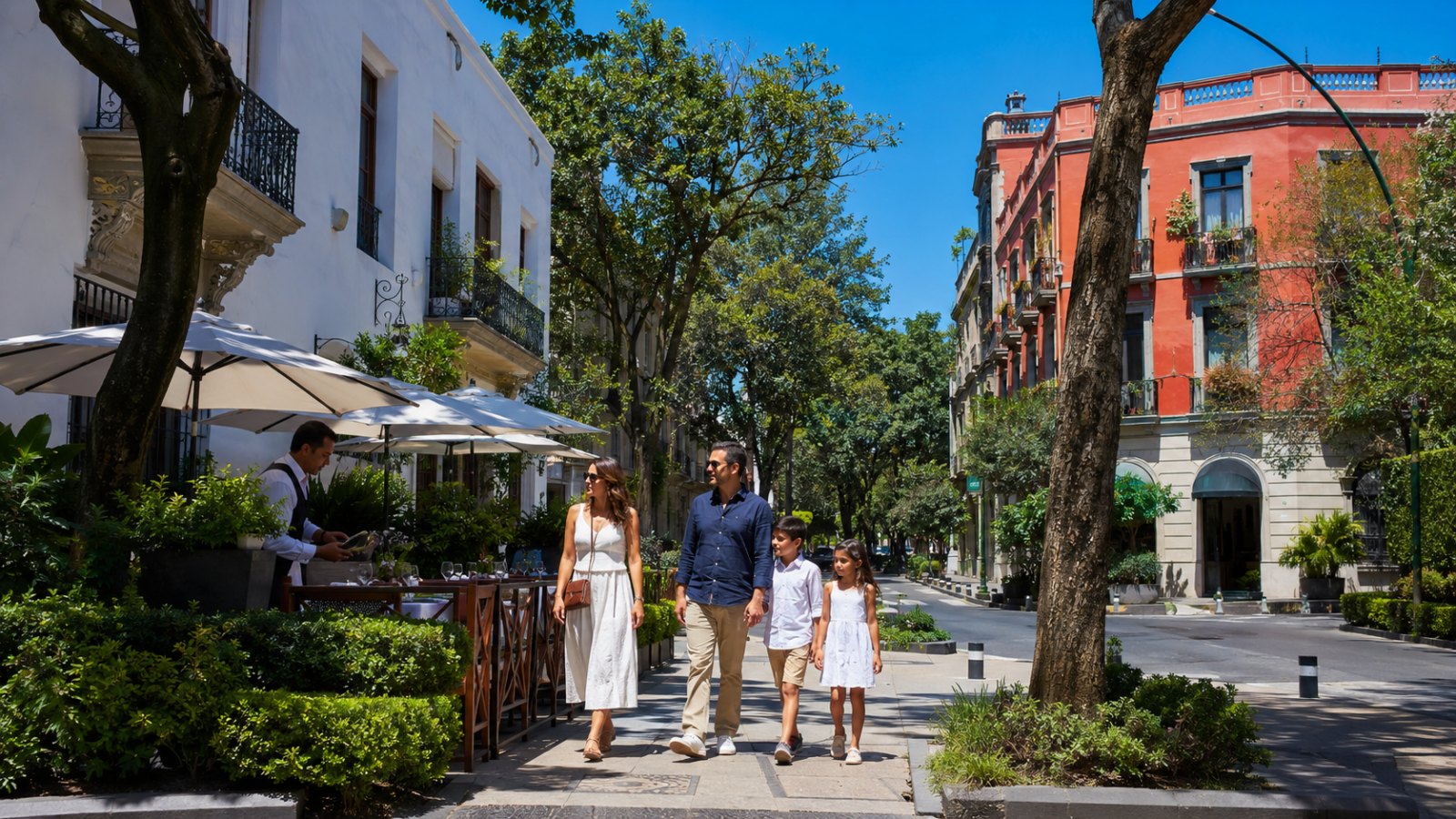
In many cities, culture is something you drive to. In Mexico City, culture can be part of the neighborhood fabric. Restaurants, museums, galleries, bookstores, parks, bakeries and cafés can shape the way a buyer uses the home. For some buyers, that is the main reason to choose a central or walkable area.
A penthouse in Condesa, such as a furnished penthouse with roof garden, may appeal not only because of the property itself, but because it places the owner inside a social and cultural rhythm. The home becomes a base for dinners, walks, guests and a lifestyle that feels connected to the city.
Other buyers prefer quieter zones and treat culture as a planned outing rather than a daily environment. That is also valid. The important point is to know whether you want culture at your doorstep or within reach by car.
Families read the city differently
A family buyer may focus less on restaurants and more on schools, bedrooms, gardens, security, staff areas, routes, play space and weekend logistics. In Mexico City, family life often pushes the search toward western residential neighborhoods, larger apartments or houses with real private space.
Properties such as a residence with pool and tennis court in Lomas Altas show a different side of city living: privacy, recreation and room to host. That lifestyle is less about spontaneous street life and more about having a complete home environment inside the property.
The family decision should also include visitors. Will relatives stay often? Are there teenagers who need independence? Does the property support household staff? Can pets use the outdoor areas comfortably? These questions matter as much as finishes.
Connectivity can be a luxury feature
In Mexico City, connectivity is not only about distance. It is about route quality, timing, parking, access to main avenues, airport strategy and how often the owner needs to cross the city. A property may be physically close to a destination but difficult in real life if the route is complicated.
A buyer working in the west may prefer a high-floor condo in Cuajimalpa or a residence in nearby residential zones, while a buyer who values historic access may prefer Cuauhtémoc, Condesa or central areas. The right location is the one that reduces friction in the owner’s actual week.
Connectivity should also be tested for guests and services. Can drivers arrive easily? Is there visitor parking? Are deliveries smooth? Does the building or street make everyday logistics feel easy or awkward? These details quietly define quality of life.
High-end real estate should support downtime
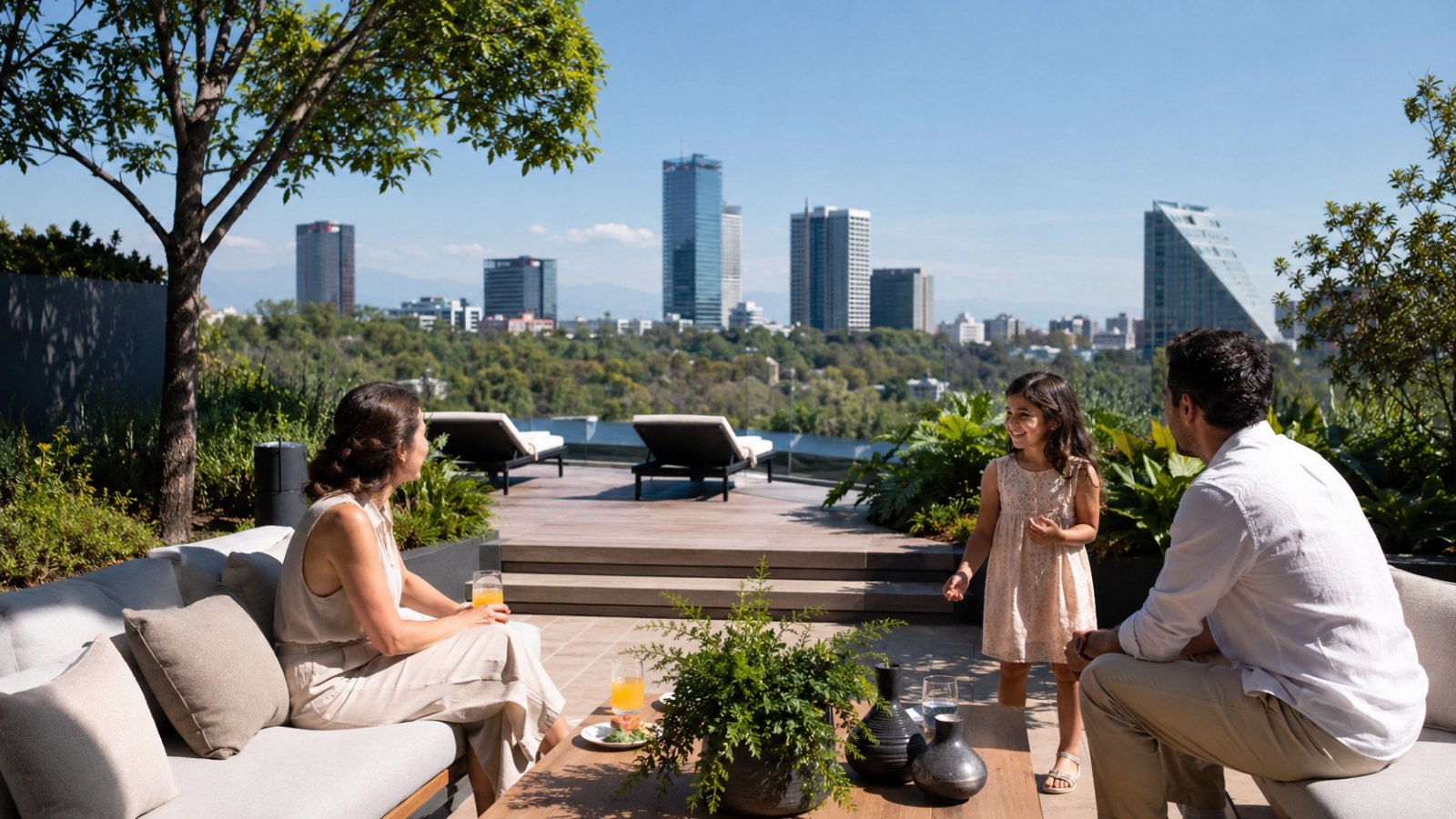
Because Mexico City is intense, the best homes create contrast. A terrace, garden, quiet bedroom, library, rooftop, inner courtyard or well-designed living room can become essential. Luxury is not only access to the city; it is the ability to recover from the city.
For vertical buyers, a penthouse with studio and garden view may offer separation between work, guests and outdoor life. For house buyers, gardens and private rooms may provide a stronger sense of retreat. The right home gives the owner both participation and pause.
This is where photos can mislead. A dramatic living room may be less valuable than a quiet bedroom, generous storage, comfortable circulation or a terrace that actually gets used. Buyers should evaluate how the home feels over time, not only how it impresses in five minutes.
Try the lifestyle before choosing the address
Before making an offer, spend time in the area without the advisor. Walk if the neighborhood is walkable. Have dinner nearby. Visit in traffic. Sit in a park. Order coffee. Watch how residents use the streets. A buyer learns more from ordinary moments than from polished descriptions.
It can also help to compare Mexico City with other lifestyle markets in the Selva & Co Realty network, such as Yucatán for a calmer rhythm or Cancún for coastal living. That comparison clarifies whether the buyer wants urban depth, beach access, family calm or a mix of several bases.
Living in Mexico City works best when the buyer chooses a specific version of the capital. The city offers many lives. The right property is the one that supports the version you actually want to live.
Weekends create a different version of the city
Weekends reveal whether the neighborhood supports pleasure, not only productivity. Some buyers want long lunches, parks, galleries and walks. Others want to leave the city quickly, host family or spend quiet time in a garden. A property that works Monday through Friday but fails on weekends may not be the right lifestyle purchase.
The best homes support both obligation and enjoyment. They make the weekday manageable and the weekend rewarding. In Mexico City, that balance can look very different by neighborhood, which is why the buyer should test the area outside office hours.
Guests and hosting should be part of the brief
Many buyers underestimate how often guests influence the property brief. Family visits, business guests, friends from abroad and weekend dinners can change the importance of guest rooms, terrace access, parking, kitchen layout, service areas and social space. A home that feels perfect for one person may feel tight when the owner begins hosting.
Luxury city living often includes the ability to receive people gracefully. That does not always require a large house. A well-planned apartment or penthouse can host beautifully if circulation, sound, seating and outdoor space work well.
A city home should reduce friction, not add performance
The goal is not to buy the most impressive property for other people to admire. The goal is to buy the home that makes the city easier to live. That may mean a quiet bedroom, a practical elevator, secure parking, a useful terrace, a neighborhood café or a route that saves thirty minutes every day.
When buyers focus on performance, they often select dramatic features that do not improve daily life. When they focus on friction, they find homes that age better emotionally. Mexico City already provides intensity; the home should provide control.
What comfort should prove after the first week
Before the buyer compares numbers, the property should pass a human test. Can the owner explain why this address makes life easier? Can the owner imagine using the home in a normal week, not only during a perfect visit? Can the owner identify what needs to be verified without feeling that the entire decision depends on hope?
This filter is simple, but it prevents many weak purchases. If the property cannot be explained clearly, the buyer probably needs more time or a better comparison. If the property can be explained in practical language, the financial review becomes more useful because it is attached to a real use case.
The best Mexico City decisions combine emotion with operational clarity. They allow the buyer to enjoy the city while knowing why the property was chosen, what it will require and how it may remain relevant over time.
How to read comfort inside a dense city
Comfort in Mexico City is often created by small details. A lobby that handles arrivals smoothly, an elevator that does not create delays, a garage that is easy to use, a bedroom positioned away from noise, a terrace with enough privacy and a kitchen that supports the owner’s actual habits can matter more than dramatic design. Buyers should pay attention to those quiet details because they shape daily satisfaction.
In a dense capital, comfort also includes control. Can you host without disturbing the rest of the home? Can you rest when the neighborhood is active? Can deliveries arrive easily? Can the owner leave for a week without worrying about the property? The best high-end homes reduce the number of things the owner has to manage personally.
This is why a lifestyle purchase should be tested slowly. A property may be beautiful, but if every arrival is complicated or every night feels noisy, the beauty becomes less persuasive. The right Mexico City home offers access to the city without making the owner feel consumed by it.
How lifestyle content should guide a real visit
From a content perspective, this topic should connect with the way buyers actually search: neighborhood, property type, purchase intention, maintenance questions and lifestyle comparison. The article should not feel like filler. It should feel like a useful conversation before speaking with an advisor.
The reader should leave with a clearer idea of what to ask, what to compare and what to avoid. That clarity is what separates generic content from a page that can turn organic traffic into a serious real estate conversation.
Selva & Co Realty
Final lifestyle questions before choosing a home
A final review should connect the property to the owner’s actual calendar. Think through arrivals from the airport, weekly errands, guest visits, parking, building access, maintenance coordination and the level of privacy expected. These everyday details rarely appear in a listing description, but they often determine whether ownership feels elegant or frustrating.
It is also useful to compare the property against one alternative you would genuinely buy. If the chosen home still makes sense after that comparison, the decision becomes stronger. If the alternative exposes weaknesses that were not obvious at first, the buyer has learned something valuable before committing.
Explore Mexico City Real Estate
Compare neighborhoods, property types and ownership details with local guidance before you choose your Mexico City base.
Explore Mexico City Real Estate →
The images shown are for reference purposes only and may not represent reality.