
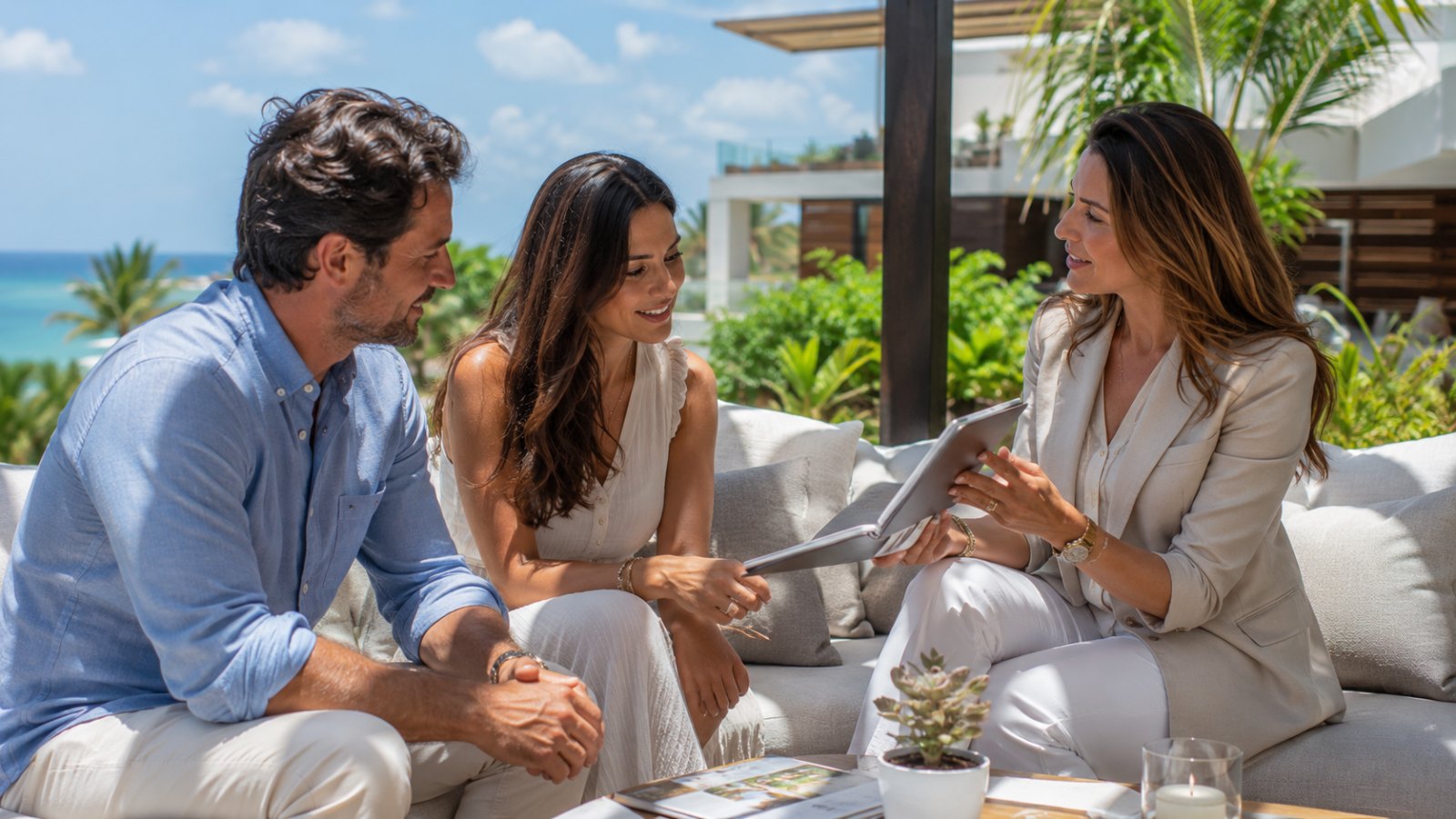
Buying Property in Playa del Carmen: A Guide for Lifestyle Buyers
Playa del Carmen rewards buyers who are clear about how they want to live. This guide helps lifestyle buyers compare location, property type, ownership responsibilities and long-term fit before choosing a home, condo or villa in the Riviera Maya.
Start with lifestyle, not only the listing
Buying property in Playa del Carmen is rarely just a search for a floor plan. For many buyers, it is a decision about rhythm: how close they want to be to the beach, how often they expect to walk to dinner, whether they prefer a quiet gated community or the movement of an urban coastal neighborhood, and how the property should support both vacation time and ordinary life. That is why a strong search usually begins with lifestyle fit before it begins with price, finishes or square footage.
A buyer considering Playa del Carmen real estate should first define the daily experience they want. Some people imagine morning walks near the water, cafés within a few blocks and a lock-and-leave condo that feels simple. Others want privacy, parking, a larger kitchen, outdoor space and the comfort of a neighborhood that feels residential rather than transient. Both paths can make sense, but they lead to different areas, property types and operating responsibilities.
The mistake is assuming that every attractive property in Playa del Carmen serves the same purpose. A beautiful condo may be convenient but not private enough for a long stay. A spacious home may feel comfortable but require more management if the owner travels often. A penthouse may photograph beautifully but still needs practical review: building rules, elevator access, storage, maintenance, noise, parking and how the surrounding area feels at different times of day.
Understand the main property paths
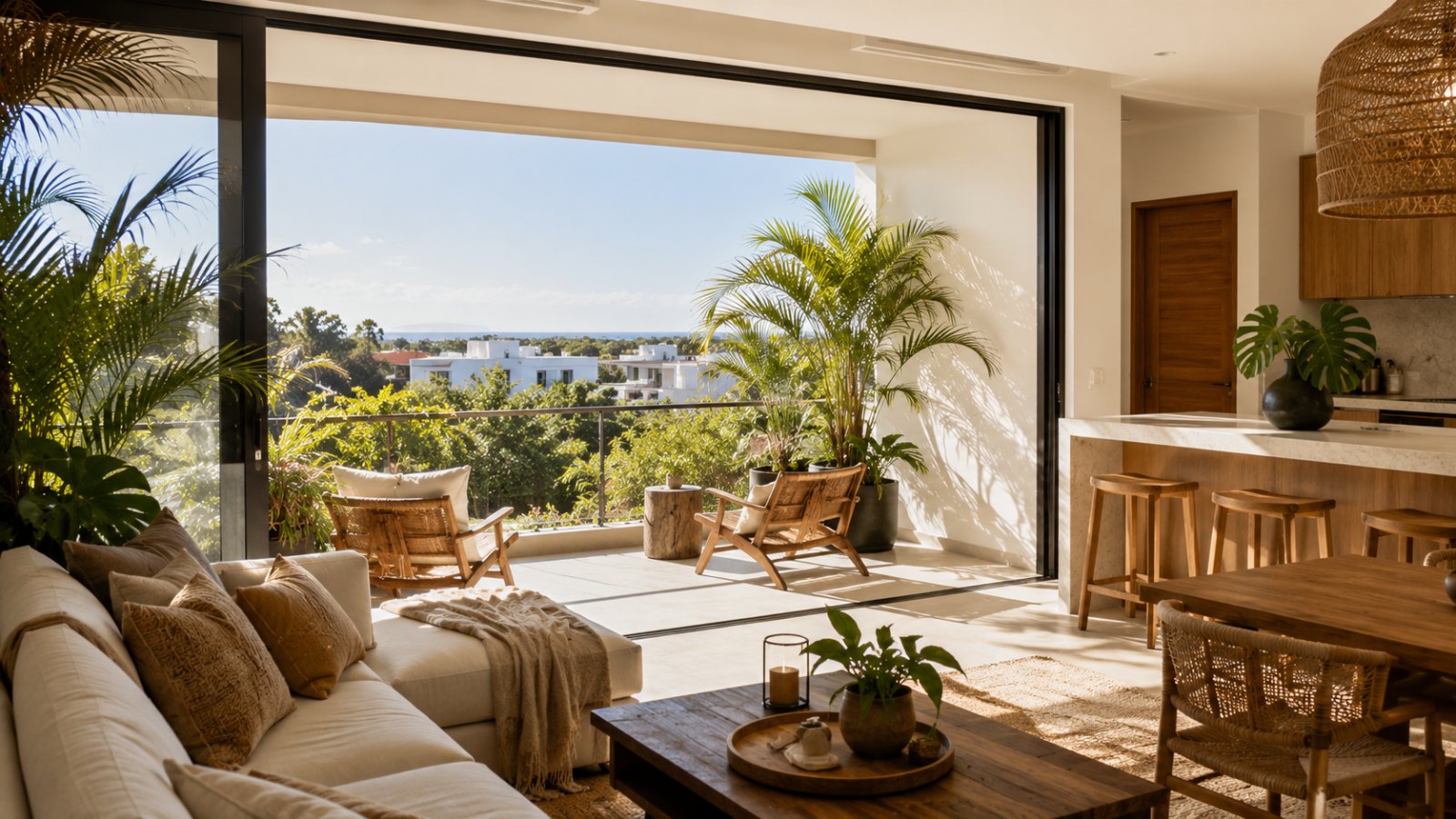
Playa del Carmen offers several buyer paths. Downtown condos attract people who value walkability, restaurants, services and quick access to the beach. A reference such as a downtown condo with infinity pool and ocean view reflects the appeal of a central lock-and-leave lifestyle: easy to use, easy to understand and aligned with buyers who want convenience first. The tradeoff is that downtown living can involve more activity, more foot traffic and a stronger need to evaluate building quality and location by block, not just by neighborhood name.
Gated-community homes create another path. A residence in Valenia gated community points to a different buyer profile: someone who wants more residential comfort, organized amenities and a sense of neighborhood structure. These properties can be attractive for families, longer stays and owners who want a calmer setting while still remaining connected to Playa del Carmen. The question is whether the buyer values privacy and space more than immediate walkability.
Then there is the resort-residential side of the market. A Playacar residence steps from the beach can appeal to buyers who want a more established, polished and beach-oriented environment. These properties are often evaluated less like simple vacation units and more like legacy lifestyle assets, where privacy, setting, architecture and long-term usability matter as much as the headline location.
Build your search around use case
Before shortlisting properties, buyers should answer a practical question: how will the property be used during the first three years? A second-home owner who visits several times a year will need a different setup than a remote worker planning three-month stays. A family relocating from another city will care about schools, supermarkets, routines and daily routes. An investor will think about demand, management, building rules and rental permissions where applicable.
For buyers who want a low-maintenance beach-oriented base, something like a Coco Beach furnished penthouse can represent the appeal of smaller-scale convenience near lifestyle zones. For buyers who want a marina or boating environment, comparing Playa del Carmen with a Puerto Aventuras marina property can clarify whether they are truly looking for Playa’s urban energy or a more controlled nautical community.
Some buyers also compare Playa with Tulum. Looking at Tulum private pool homes can be useful, not because Tulum is better or worse, but because it reveals different priorities: more jungle design, a slower atmosphere in certain areas and a different development rhythm. Playa del Carmen generally feels more connected and practical, while Tulum often speaks to buyers who want a more boutique, wellness-forward identity.
Due diligence is where the lifestyle dream gets real
A good lifestyle purchase still requires disciplined review. Buyers should confirm title status, condominium regime documents when applicable, association rules, maintenance obligations, delivery status for new projects, parking rights, pet policies, rental restrictions, construction quality and whether the property use matches the buyer’s expectations. The prettiest terrace in the world does not fix unclear paperwork. Real estate is still real estate, even when the palm trees are doing their best sales pitch.
International buyers should also understand that coastal property ownership in Mexico can involve specific legal structures. The right path depends on the buyer, property location and intended use, so the process should be reviewed with qualified local legal and closing professionals. A real estate advisor can help organize the search, but legal and tax guidance should come from the appropriate specialists.
Working with Selva & Co Realty helps buyers turn broad interest into a more focused search: area, property type, budget discipline, ownership timeline and review steps. The goal is not to push every buyer into the same answer. The goal is to eliminate options that look good online but do not fit the buyer’s real life.
When Playa del Carmen may not be the right fit
Playa del Carmen is not perfect for every buyer. Someone seeking complete silence, large land, or a very private estate environment may prefer another Riviera Maya destination or a more residential inland setting. Someone who dislikes active urban zones may find some downtown blocks too busy. A buyer who expects every property to operate like a hotel may underestimate the responsibility of ownership, especially in buildings with rules and shared administration.
That is why the strongest decisions come from honest comparison. Buyers should visit at different times, walk the surrounding blocks, test routes to the beach and services, and think carefully about who will manage the property when they are away. The best purchase is not necessarily the most dramatic listing; it is the property that still feels right after the excitement cools down and the practical details are on the table.
A practical buyer checklist
A serious buyer should leave each property visit with clear notes. How does the building feel on arrival? Is the lobby maintained? Are common areas clean? Is the elevator reliable? Where is the parking? Does the unit receive enough natural light? Are there neighboring construction sites? How does the street feel at night? These questions are not glamorous, but they protect the buyer from making a decision based only on mood.
Buyers should also compare monthly carrying costs. Association fees, utilities, insurance, property management, maintenance reserves and occasional repairs can change the ownership experience. A property that looks affordable at purchase may feel less attractive if the operating structure is not aligned with the owner’s expectations. The goal is not to find a property with no costs; that property does not exist. The goal is to understand the costs before committing.
Finally, buyers should separate wants from non-negotiables. A rooftop pool may be a want. Proper documentation is non-negotiable. A pretty furniture package may be a want. A building that allows the intended use is non-negotiable. A few blocks closer to the beach may be a want. A location that feels safe and usable for the buyer’s routine is non-negotiable. That distinction keeps the search clear.
Ownership scenarios to compare
It also helps to compare three ownership scenarios before making a decision. In the first scenario, the property is mostly personal: the owner uses it with family and friends, values comfort over yield, and wants the home to feel familiar every time they return. In that case, layout, storage, privacy, parking, natural light and the emotional feel of the neighborhood may carry more weight than rental efficiency.
In the second scenario, the property is mixed-use: the owner wants to enjoy it, but also wants the option to generate income where building rules and local requirements allow it. This buyer has to think like both a resident and an operator. Furniture durability, access control, cleaning logistics, guest experience, building administration and management reliability become part of the evaluation. A good-looking unit with complicated rules may not serve this scenario well.
In the third scenario, the property is mainly strategic: the buyer is focused on long-term ownership, market positioning and future flexibility. This does not mean chasing guarantees. It means choosing a location and property format that remain understandable to future buyers. Simple layouts, strong administration, useful amenities, clear documentation and a neighborhood with lasting lifestyle appeal often matter more than trend-driven design details.
Questions to ask before making an offer
Before making an offer, buyers should ask what problem the property solves. Does it solve the need for beach access? Does it solve the need for family space? Does it solve the desire for a low-maintenance base in Mexico? Does it solve the need for a property that can be managed professionally when the owner is away? If the answer is vague, the buyer may be reacting to presentation rather than making a grounded decision.
They should also ask what could become inconvenient over time. A beautiful unit may have limited storage. A central location may bring noise. A private home may require more maintenance. A gated community may require more driving. None of these issues automatically disqualify a property, but they should be visible before the buyer commits. Every property has tradeoffs. The buyer’s job is to choose the tradeoffs they can live with.
This is where local guidance becomes valuable. An advisor who knows the area can help interpret the difference between a marketing feature and a daily-life advantage. The goal is not to make the search more complicated. The goal is to make the decision cleaner, so the buyer can move forward with confidence rather than crossed fingers.
How to move from interest to action
The best next step is not to see every listing in the market. The best next step is to create a short, organized buyer profile: preferred use, desired area, property type, budget range, tolerance for maintenance, rental expectations where applicable and timeline. Once that profile is clear, the search becomes more strategic and less exhausting.
Playa del Carmen offers enough variety to support many buyer profiles, but that variety can also create confusion. A focused advisor helps reduce noise. Instead of chasing every attractive photo, the buyer compares only the properties that match the plan. That is how a lifestyle dream becomes a responsible real estate process.
Final review before publication or purchase
The final review should bring the conversation back to fit. If the property is meant for personal use, the buyer should imagine ordinary days, not only vacation days. If it is meant for flexible ownership, the buyer should confirm whether the rules, layout and management plan support that flexibility. If it is meant as part of a long-term portfolio, the buyer should ask whether future buyers will understand the value as clearly as the current buyer does.
This review also keeps the search honest. Playa del Carmen has many visually appealing properties, and strong presentation can create urgency. A calm review slows the decision down just enough to protect it. The right property should still make sense after the buyer compares documents, area, management, costs, building rules and the way the home will actually be used.
When those pieces align, the decision becomes easier. The buyer is no longer choosing from every attractive listing in Playa del Carmen. They are choosing from a short list of properties that match lifestyle, operations and long-term logic. That is the difference between browsing real estate and buying well.
Selva & Co Realty
Ready to compare Playa del Carmen property options?
Connect with Selva & Co Realty to evaluate homes, condos and lifestyle communities in Playa del Carmen with local guidance.
Explore Playa del Carmen Real Estate →
The images shown are for reference purposes only and may not represent reality.