
Best Areas to Buy Property in Tulum
Tulum is best understood by area. This guide compares Aldea Zama, La Veleta, Tankah, Tulum Country Club and nearby lifestyle options so buyers can choose based on daily use, privacy, access and long-term fit.
Think in zones, not just listings
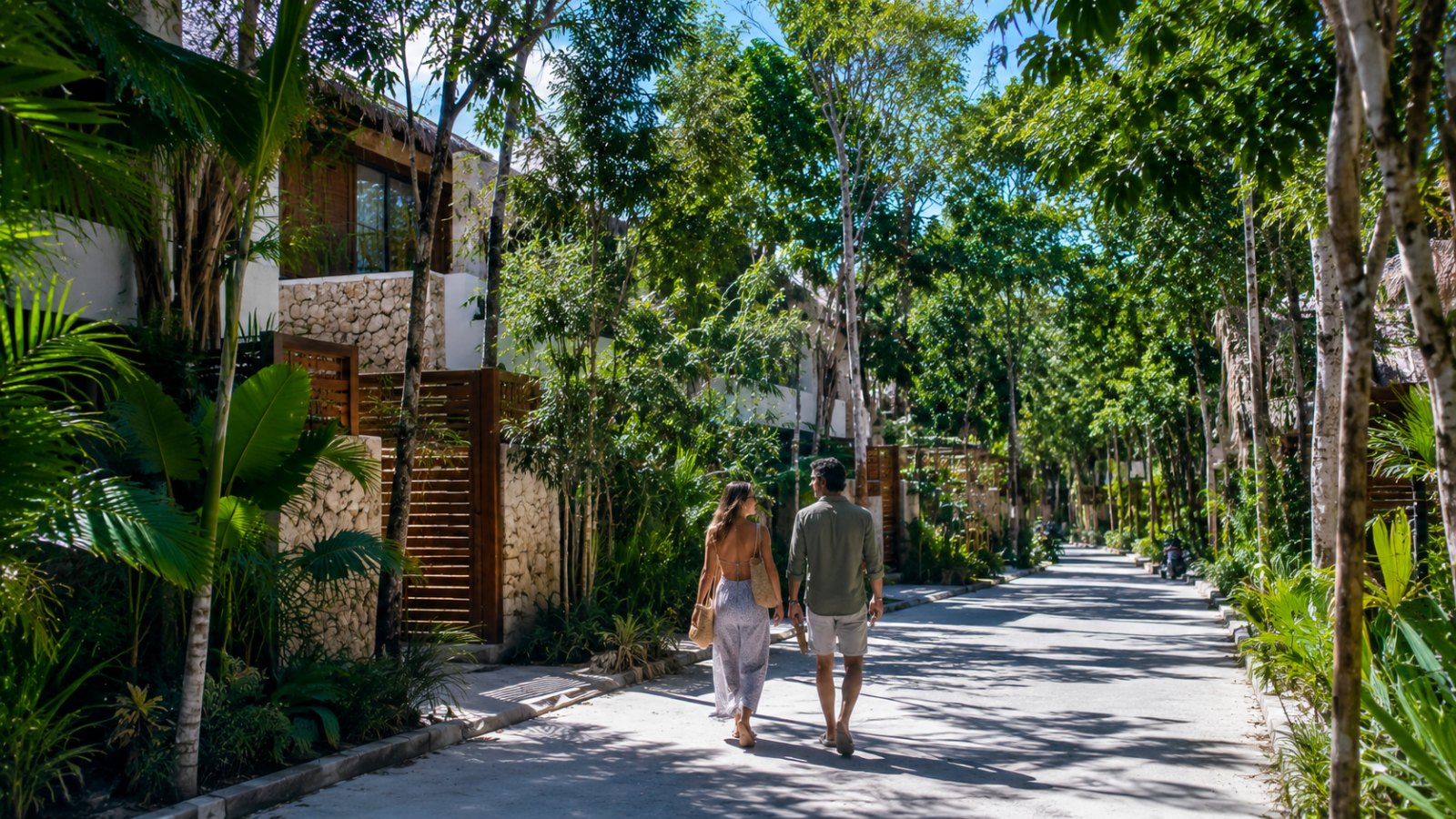
The best areas to buy in Tulum real estate depend on lifestyle, privacy, access and property type. Tulum is not a single uniform market. A buyer comparing Aldea Zama, La Veleta, Tankah and Tulum Country Club is really comparing different versions of daily life. One area may feel convenient and recognizable, another more residential and evolving, another more beach-oriented, and another more master-planned.
A strong area decision starts with honest use. Will the property be a personal retreat, a seasonal home, a flexible rental where allowed, or a long-term lifestyle asset? A neighborhood that works beautifully for short stays may not be the best fit for a family spending months at a time. An area that feels quiet and private may require more driving. The right choice is the one that matches real routines, not only the most attractive name.
Aldea Zama: recognizable, central and established
Aldea Zama is one of the most recognized residential zones in Tulum. A property like an Aldea Zama private pool home can appeal to buyers who want a planned environment, proximity to dining and wellness services, and a location that is easy for many visitors to understand. A Aldea Zama garden residence points to the same buyer logic: privacy, tropical outdoor living and a residential setting that feels connected to the broader Tulum lifestyle.
The strength of Aldea Zama is familiarity. Buyers often like that it feels easier to explain, easier to tour and easier to compare with other options. The tradeoff is that the buyer still has to evaluate block by block. Street feel, construction nearby, access, building quality, privacy and management all matter. A known neighborhood name should never replace due diligence.

La Veleta: design-forward and residential
La Veleta often attracts buyers who want a more relaxed, residential and design-forward version of Tulum. A La Veleta villa reflects the appeal: private outdoor space, rooftop living, modern finishes and a villa format that can feel personal rather than hotel-like. Buyers looking for architecture and privacy often include this area in their comparison.
The advantage of La Veleta is the possibility of a more intimate home experience. The tradeoff is that buyers should carefully evaluate access, surrounding development, road conditions, services and how the area feels at night. For the right buyer, that evolving character is part of the charm. For another buyer, it may feel less predictable than a more established zone.
Tankah: coastal retreat energy
Tankah speaks to a different buyer profile. A Tankah beach club condo or a Tankah condo with private terraces can appeal to someone who wants a stronger connection to the water, quieter coastal energy and a retreat-like environment. This is not the same lifestyle as being close to Tulum’s central movement. It is more about the feeling of escape, natural setting and a property experience shaped by the coast.
Buyers considering Tankah should evaluate access, rules, services, maintenance, beach conditions and the logistics of ownership when they are away. Coastal beauty can be powerful, but it should be matched with practical expectations. A buyer who wants to walk to a wide range of restaurants every night may prefer another zone. A buyer who values privacy and coastal mood may see Tankah differently.
Tulum Country Club: organized amenities and golf views
A Tulum Country Club condo introduces another path: a more organized, amenity-driven environment. Buyers who like structure, golf views, controlled access and master-planned amenities may find this direction more comfortable than the more organic parts of Tulum. It can be particularly relevant for buyers comparing Tulum with resort-residential communities in the broader Riviera Maya.
The key question is whether the buyer wants Tulum’s rawer design identity or a more planned residential experience. Neither answer is automatically better. The best choice depends on the buyer’s comfort level, desired routine and long-term use.
Compare Tulum with nearby destinations
Area choice becomes clearer when buyers compare Tulum with nearby markets. Playa del Carmen real estate may offer more daily convenience, walkability and an established urban beach lifestyle. Puerto Aventuras real estate may appeal to buyers who want marina living, boating, golf and a private community atmosphere. Tulum sits apart because its strongest value is lifestyle identity: design, nature, wellness and privacy.
That comparison helps buyers avoid choosing Tulum for the wrong reason. If the buyer is mainly seeking convenience, Playa del Carmen may fit. If the buyer wants marina structure, Puerto Aventuras may fit. If the buyer wants the Tulum mood specifically, then the search should focus on the zone that delivers that mood with acceptable practical tradeoffs.
How to tour Tulum areas intelligently
A smart buyer should tour zones at different times of day. Morning visits show light, traffic and service activity. Afternoon visits reveal heat, shade and street movement. Evening visits show noise, lighting, access and how comfortable the area feels after dark. These impressions matter because Tulum can change dramatically from one block to another.
Buyers should also ask about construction nearby, delivery timelines, property management, water and utility setup, road access and community rules. A property may be visually strong, but the area context determines whether it fits the buyer’s life.
Choosing the best area for your profile
The best area is not the one with the loudest marketing. It is the one that supports the buyer’s real use. Aldea Zama may work for a buyer seeking familiarity and centrality. La Veleta may suit a buyer who wants design and privacy. Tankah may fit a buyer wanting coastal retreat energy. Tulum Country Club may serve a buyer who values structure and amenities.
Once the buyer understands those differences, the search becomes more efficient. Instead of asking which area is best in general, the buyer can ask which area is best for their ownership plan. That shift is where better decisions begin.
Practical questions before choosing
Before making a decision, buyers should write down the non-negotiables. These may include clear documentation, reliable access, privacy, parking, a usable outdoor area, manageable maintenance and a location that feels comfortable for the intended routine. Wants can be flexible; non-negotiables should not be blurred by a beautiful terrace or a dramatic pool.
It also helps to compare the property on an ordinary day, not only on a perfect vacation day. Where will groceries come from? How long is the drive to dinner? How will guests arrive? Who will handle maintenance? Does the home feel good in the afternoon heat? These ordinary questions often reveal whether a property is truly aligned with the buyer.
Final decision framework
A strong purchase should pass three tests. First, the lifestyle test: the property should support how the buyer wants to live. Second, the operational test: the property should be manageable under real conditions. Third, the documentation test: the legal and administrative review should be clear enough for the buyer to proceed with confidence.
When all three tests align, the decision becomes cleaner. The buyer is no longer reacting to presentation or pressure. They are choosing a property that fits a defined plan. That is the difference between browsing Tulum real estate and buying well in Tulum.
How to compare final candidates
When the buyer reaches the final candidates, the comparison should become more specific. Each property should be measured against the same criteria: area fit, documentation, property condition, management structure, expected carrying costs, privacy, access, maintenance, future flexibility and emotional fit. Scoring properties this way may feel less romantic, but it prevents the decision from being controlled by one dramatic feature.
The final comparison should also include a downside review. Buyers should ask what could become annoying, expensive or limiting over time. A private villa may require more maintenance. A beach-oriented condo may have stricter rules. A developing area may change around the property. Naming the downside does not ruin the opportunity; it helps the buyer choose the tradeoffs they can live with.
Why patience can protect the purchase
Tulum can create urgency because the visual language is powerful. Villas, terraces, pools and tropical gardens can make a buyer feel that the decision must be immediate. Patience protects the purchase. A serious buyer can move quickly when needed, but the review should still be orderly: documents, area, rules, costs, inspection questions and closing process.
A patient process also helps the buyer distinguish scarcity from pressure. Some properties are genuinely special. Others are simply well photographed. The difference becomes clearer when the buyer has a defined plan and compares options with discipline. That is how a lifestyle-driven search becomes a responsible real estate decision.
The strongest buyer profile
The strongest Tulum buyer is not necessarily the one with the largest budget. It is the buyer who knows what they want, understands the tradeoffs and respects the due diligence process. That buyer can appreciate the lifestyle without ignoring the operational side of ownership. They can enjoy the dream and still ask practical questions.
This balance is especially important in a destination where lifestyle is part of the appeal. The right property should feel inspiring, but it should also be understandable, usable and maintainable. When inspiration and practicality meet, the purchase has a stronger foundation.
What to review in the first shortlist
The first shortlist should be small enough to compare carefully. Buyers should group properties by area, property type and use case, then remove any option that does not satisfy the essentials. A villa that feels exciting but fails the management test should not stay on the list simply because the photos are strong. A condo that looks efficient but has unclear rules should be paused until the administration details are understood.
A useful shortlist also includes at least one comparison property that challenges the buyer’s assumptions. For example, someone focused on villas may benefit from seeing one well-managed condo, and someone focused on condos may benefit from touring one private villa. The point is not to change direction at random; it is to confirm the chosen direction with evidence instead of instinct alone.
How local guidance improves the process
Local guidance matters because Tulum is highly nuanced. Two properties can sit in the same broad area and offer very different ownership experiences. One may have better access, better administration or a calmer street. Another may have more dramatic design but require more operational attention. Online research helps, but it cannot fully replace walking the area and understanding the practical details.
A strong advisory process should make the buyer more selective, not more overwhelmed. The advisor’s role is to help clarify the tradeoffs, organize the review, connect the buyer with appropriate specialists and keep the search aligned with the original goals. That discipline protects the buyer from chasing every new listing that appears attractive for five minutes.
Selva & Co Realty
Find the Tulum area that fits your life
Get local guidance to compare Aldea Zama, La Veleta, Tankah, Tulum Country Club and nearby Riviera Maya options.
The images shown are for reference purposes only and may not represent reality.