
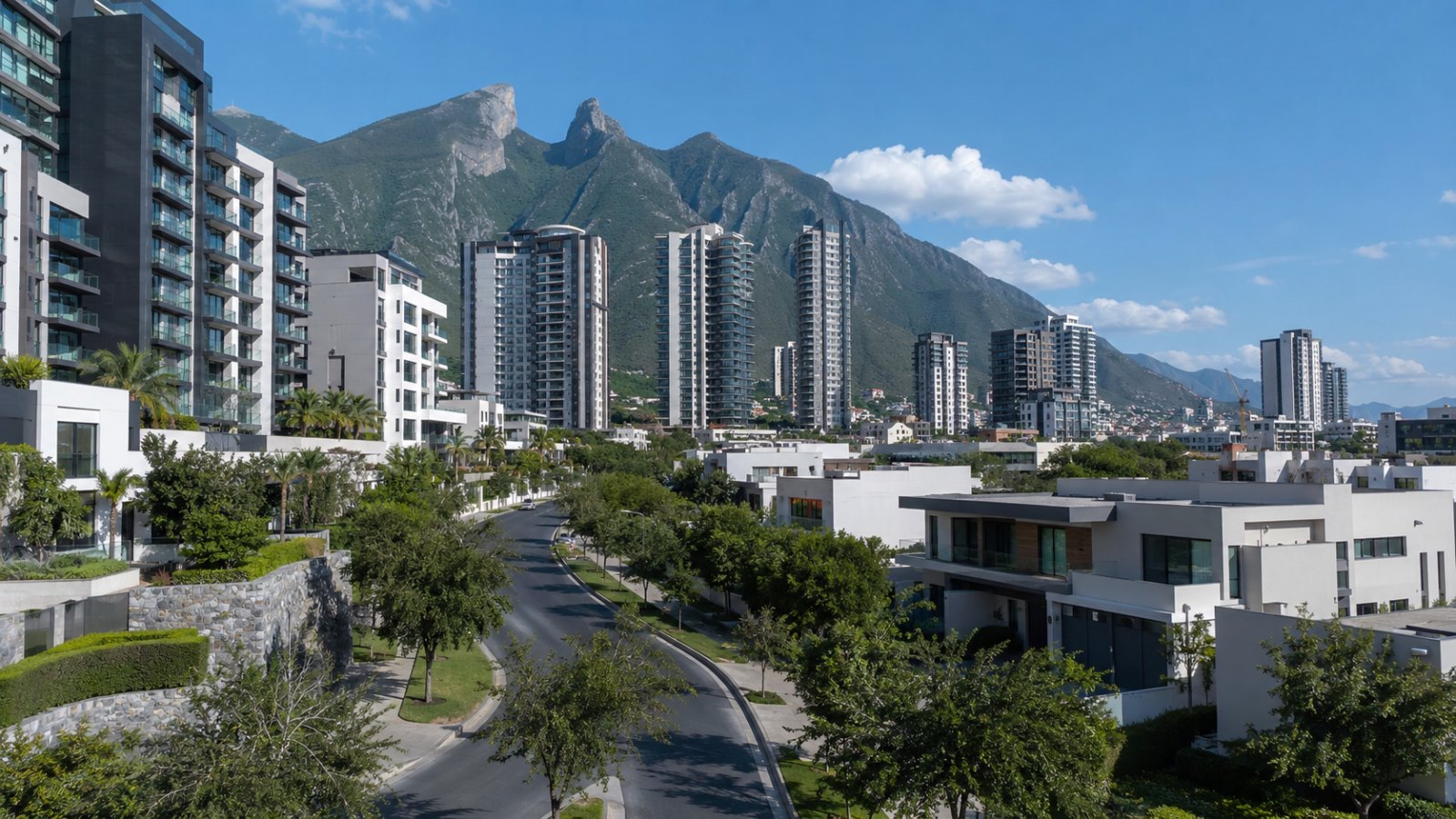
Apartments, Penthouses and Homes in Monterrey: Choosing the Right Property Type
Apartments, penthouses and homes can all make sense in Monterrey, but they create very different ownership experiences. Choosing the right property type is less about chasing a label and more about matching privacy, amenities, maintenance and long-term use.
Property type decides how ownership feels
In Monterrey, the difference between an apartment, penthouse and home is not only architectural. It changes how ownership feels. An apartment may offer security, amenities and easier maintenance. A penthouse may add views, privacy and outdoor entertaining. A house may provide control, space and independence. Each category can be premium, but each demands a different relationship with time, service and daily use.
Buyers should begin by asking how they want to live during an ordinary week. Do they need a lock-and-leave residence? Do they host often? Are children part of the daily routine? Do they work from home? How important are mountain views, private outdoor areas, staff access or building amenities? The right property type is the one that answers those questions with the least compromise.
A buyer reviewing a premium San Pedro apartment with family amenities is evaluating a vertical lifestyle with built-in services. A buyer reviewing a home is evaluating a different kind of control. Neither answer is automatically better. Monterrey simply requires the category to match the life behind the purchase.
Apartments: efficiency, security and amenities
Premium apartments are attractive in Monterrey because they can deliver comfort without requiring the owner to manage every detail independently. Security, parking, common areas, gyms, children’s spaces, wellness amenities and building administration can simplify life for busy professionals and families. For buyers who travel, work long hours or want a lower-maintenance home, this can be a decisive advantage.
The risk is assuming all apartment buildings operate at the same level. Buyers should compare administration, resident profile, amenity condition, elevator capacity, parking design, monthly dues and rules. A beautiful unit in a weak building can become frustrating. A slightly less dramatic unit in an excellent building may deliver a better ownership experience.
A apartment with kids lounge, jacuzzi and spa may work well for buyers who want family amenities and an easier ownership structure. The value is not only inside the unit. It is in the building’s ability to support a complete daily routine.
Penthouses: views, status and responsibility
Penthouses often attract buyers who want the emotional high point of vertical living: views, privacy, entertaining space and a sense of distinction. In Monterrey, mountain and skyline views can be especially powerful. A well-designed penthouse can feel like a private residence above the city, offering the convenience of a building with some of the presence of a standalone home.
That presence comes with questions. Outdoor areas require maintenance. Larger terraces may face sun, wind or privacy considerations. Higher floors can depend more heavily on elevator performance and building systems. Buyers should review how the building handles waterproofing, terrace care, service access and emergency procedures. The better the view, the more important the invisible systems become.
Penthouses are best for buyers who will use the extra space intentionally. If the terrace becomes the family’s social center or the view is central to the home’s identity, the premium may make sense. If the extra area is mostly symbolic, a strong apartment with better layout or amenities may be smarter. Status is fun, but function pays the bills.
Homes: control, space and operational load
Standalone homes offer a type of ownership many buyers still prefer. They can provide larger living areas, private outdoor space, flexibility for renovations, more independence and a stronger sense of personal territory. For families with pets, frequent guests or specific privacy needs, a home can feel more natural than vertical living.
The tradeoff is responsibility. Security, maintenance, repairs, landscaping, service providers and long-term upkeep require planning. Buyers should be honest about whether they want to manage a home or whether they need a residence that handles more of the operational burden through building administration. A house can be excellent, but it is rarely passive.
A comfortable everyday home in Ciudad Apodaca can be relevant for buyers who want practical residential use within the metropolitan area. It sits in a different category from San Pedro luxury condos, but it helps illustrate an important point: Monterrey offers more than one ownership model, and the correct model depends on the buyer’s goals.
Amenities can replace square footage, but only sometimes
One reason apartments compete with homes is that building amenities can replace some private square footage. A family that uses a gym, pool, kids lounge, spa and social room may not need every function inside the private unit. Shared amenities can make a smaller residence feel more complete. This is especially valuable in urban markets where convenience and security are priorities.
However, shared amenities are not the same as private space. Buyers should understand schedules, reservation systems, guest rules and usage patterns. If amenities are difficult to access or poorly maintained, they do not add much value. If they are well managed and genuinely useful, they can transform daily life.
This is why an apartment with jacuzzi, spa and kids playground may be compelling for one household, while another prefers the privacy of a larger home. The decision should be based on how often the amenity will be used, not how attractive it looks in a rendering.
Investment logic changes by property type
Apartments, penthouses and homes may respond differently to market demand. Premium apartments can appeal to executives, families and investors who value security and amenities. Penthouses may have a narrower but more emotional buyer pool. Homes may attract buyers looking for independence, but they can require more maintenance and may depend heavily on exact location.
Resale should be considered from the start. Who will likely buy the property later? A family? An executive? An investor? A relocating business owner? A buyer from another city? The more clearly a property matches a future demand profile, the stronger its long-term story can be. Monterrey’s market is practical; future buyers will ask practical questions too.
A San Pedro apartment with a golf simulator may tell a lifestyle story that is specific and premium. A buyer should still ask how that story will read in five or ten years. Good real estate is not only attractive today; it remains understandable to the next buyer.
The right category makes ownership calmer
The best property type is the one that reduces friction. If a buyer wants travel flexibility, security and amenities, an apartment may be the calmest choice. If the buyer wants views, outdoor entertaining and distinction, a penthouse may fit. If the buyer wants control, private space and independence, a home may be worth the operational load.
Monterrey gives buyers enough variety that they do not have to force the wrong category. The key is to resist shopping by prestige alone. A property should fit the buyer’s schedule, budget, family structure and holding period. When that alignment exists, ownership feels smoother and long-term value becomes easier to defend.
Buyers comparing apartments, penthouses and homes in Monterrey can speak with Selva & Co Realty about Monterrey to build a shortlist around use case first. That approach may sound less dramatic than chasing the shiniest listing, but it usually leads to better decisions.
The category should support the exit
Even buyers who plan to hold for many years should think about the exit. A future buyer will ask why this category makes sense in this location and building. If the answer is clear, resale becomes easier to defend. If the answer depends only on personal taste, the property may be harder to position later.
That does not mean buying without emotion. It means choosing a property whose emotional appeal is supported by practical fundamentals. Monterrey buyers can have both, but only when category, location and use case are aligned.
The wrong category creates hidden costs
Choosing the wrong property type can create costs that do not appear in the purchase price. A buyer who wants low maintenance but chooses a large home may spend years managing repairs, vendors and security. A buyer who wants privacy but chooses a busy amenity building may feel watched or crowded. A buyer who wants easy resale but chooses an overly customized penthouse may narrow the future buyer pool. Category mistakes are expensive because they repeat every month.
This is why buyers should treat property type as strategy. An apartment is a strategy for convenience, services and building-supported lifestyle. A penthouse is a strategy for views, privacy and entertaining with more responsibility. A home is a strategy for control, space and independence with greater operational load. None of these categories is automatically superior. Each one has to match budget, personality and holding period.
A useful exercise is to rank what the property must do on the worst day, not the best day. On the best day, every option looks good. On the worst day, the differences appear: elevator wait, parking friction, a terrace leak, a garden repair, noise from neighbors, an amenity reservation problem or a long drive after work. Good property selection anticipates those moments before closing.
Buyers should also ask how much of the property’s value is private and how much is shared. In an apartment, the building’s shared value is significant. In a home, private control is greater. In a penthouse, both forces may be present. Understanding that balance helps buyers know what they are truly buying and what they must rely on others to maintain.
The right category should feel like relief. It should make ownership calmer, not more complicated. When buyers choose according to how they live instead of how the category sounds, Monterrey offers strong options across the spectrum. The city has the inventory; the buyer needs the correct operating manual.
A showing should test the ownership model
During a showing, buyers should test the ownership model, not just the rooms. In an apartment, they should walk the common areas and understand how residents actually use them. In a penthouse, they should study terraces, exposure and maintenance obligations. In a home, they should imagine service providers, security routines and repairs. The visit should reveal what ownership will demand.
This approach prevents a common mistake: falling in love with a category that does not match the buyer’s tolerance for responsibility. Monterrey offers polished choices, but polish does not remove operational reality. The right type of property should feel manageable before it feels impressive. If it can do both, that is where the strongest fit usually appears.
Selva & Co Realty
Explore Monterrey real estate with Selva & Co Realty
Compare premium apartments, homes and long-term opportunities in Monterrey with a local advisory team focused on fit, lifestyle and value.
The images shown may not be real and are for reference purposes only.